

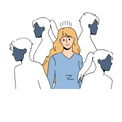
The term ‘personality’ describes our patterns of thinking, feeling, and behaving, that make up who we are as an individual, and how we see ourselves. Usually, an individual’s personality is fairly stable, meaning that it does not alter across situations. For other people, their personality may fluctuate, which can lead to difficulties in how they see themselves, and how they interact with others. Individuals who have personality difficulties, may find it difficult to cope with the complexity of their lives, manage their emotions, and interact with others.
As a result, personality difficulties can lead to difficulties in making and maintaining relationships, regulating emotions (difficulty understanding emotions and how to manage them), and managing impulsive behaviours (involves acting before thinking about the implications).
Personality difficulties can be divided into clusters of Cluster A (difficulties relating to others), Cluster B (difficulties with regulating emotions) and Cluster C (involves experiencing intense feelings of fear and anxiety).
What can help?
- Talking to someone: Talking to a friend, family member, or someone you trust about difficulties you are experiencing, might be helpful rather than bottling things up.
- Building up your understanding: Learning to understand more about how you respond in situations, and how you manage your emotions.
- Seek professional help: Speak with your doctor about what services might be helpful. Examples of the types of talking therapies that people might find helpful include:
- Dialectical Behavioural Therapy (DBT): DBT Is aimed at individuals who experience intense emotions, and struggle to manage them.
- Mentalisation Based Therapy: Mentalisation involves an individual interpreting the actions of others, and themselves, in relation to their needs, beliefs, and desires to help gain a better understanding of others, and consequently improve their relationships.
- Therapeutic communities: Some people may find it helpful to engage in a residential programme. This involves working with a group of people who have similar difficulties whilst participating in lots of activities.
Useful Clips and Stories:
Apps:
- DBT emotional regulation tools – Apple – Android
- The Zones of Regulation
- DBT Skills Diary Card App – Apple – Android
